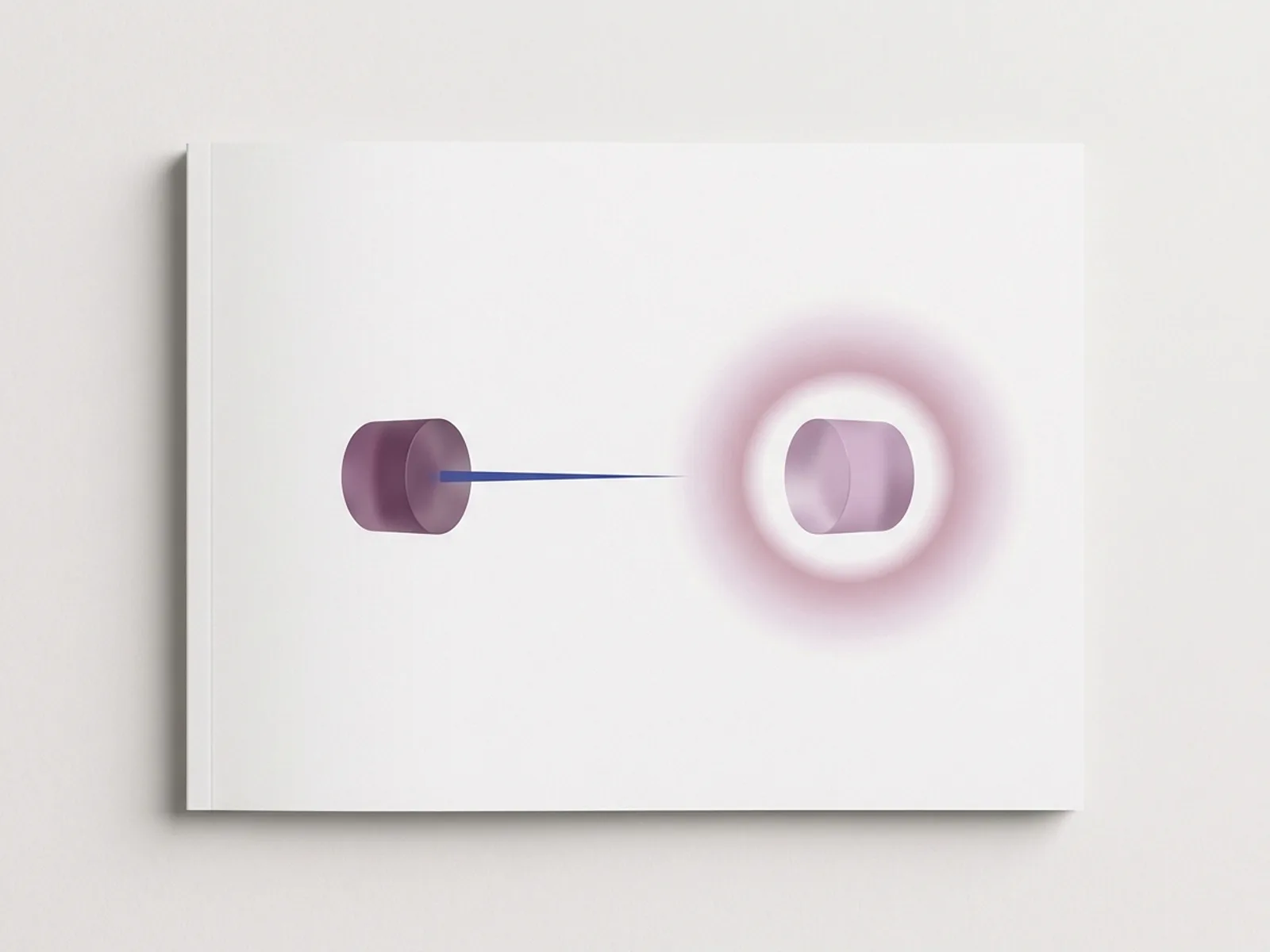
CO2 and erbium:YAG (Er:YAG) are the two dominant ablative laser platforms for skin resurfacing. Both remove damaged skin and stimulate new collagen formation. Both are used for wrinkles, acne scars, photodamage, and skin texture. And both have been studied extensively for over two decades.
But they interact with skin tissue in fundamentally different ways, and the difference matters for every patient. CO2 delivers more heat, produces more collagen contraction, and requires more recovery. Er:YAG ablates more precisely, produces less collateral thermal damage, and heals faster. The clinical question is never "which is better?" — it is "which matches this patient's skin type, the depth of the problem, and their tolerance for downtime?"
The core difference: how each laser interacts with water
Both CO2 and Er:YAG are ablative lasers that target water as their chromophore. When the laser energy is absorbed by water in the skin cells, it vaporizes the tissue. The difference is in how efficiently each wavelength is absorbed.
CO2 (10,600 nm). The 10,600 nm wavelength has a water absorption coefficient of approximately 800 cm⁻¹. It ablates tissue but also leaves a zone of residual thermal damage (RTD) of up to 200 μm beyond the ablation front. This thermal damage is what drives collagen contraction and remodeling — the "tightening" effect that CO2 is known for. But it also means more inflammation, longer erythema, and higher risk of pigmentation changes.
Er:YAG (2,940 nm). The 2,940 nm wavelength has a water absorption coefficient of approximately 13,000 cm⁻¹ — roughly 16 times higher than CO2. It ablates tissue far more efficiently per pass, with residual thermal damage of only 20–50 μm. This means precise removal of tissue with minimal heat spread to surrounding skin. Less heat means less collagen contraction but also less inflammation, faster re-epithelialization, and lower risk of post-inflammatory hyperpigmentation (PIH).
This difference in thermal profile is the single most important variable for clinical decision-making.
Acne scars: depth vs. safety
For atrophic acne scars — the most common indication for ablative resurfacing — the choice depends on scar depth and the patient's skin type.
A 2024 meta-analysis and systematic review published in the Journal of Cosmetic Dermatology compared fractional CO2 and fractional Er:YAG for atrophic acne scars. The findings were clear:
CO2 fractional laser demonstrated superior efficacy for scar improvement (weighted mean difference 1.77 on standardized scales).
CO2 produced longer erythema duration compared to Er:YAG (WMD 1.85 days).
There was no significant difference in pain duration or PIH incidence between the two, though clinical practice consistently reports lower PIH risk with Er:YAG, especially in darker skin.
The explanation is mechanical: CO2's deeper thermal penetration reaches the fibrotic tethering in the mid-dermis that anchors acne scars. Er:YAG's precise ablation can reach similar depths, but without the sustained thermal injury that breaks down the fibrotic bands as effectively.
For deep, pitted acne scars (ice pick, deep boxcar), CO2 is generally the more effective modality. For shallow boxcar scars and rolling scars with minimal fibrosis, Er:YAG can produce meaningful improvement with faster healing.
A common clinical approach is to combine modalities: TCA CROSS or subcision for the deepest scars, followed by fractional resurfacing (CO2 or Er:YAG depending on skin type) for overall texture improvement.
Wrinkles: tightening vs. refinement
For wrinkles and photoaging, the platforms serve different severities.
CO2 produces visible tightening through thermal collagen denaturation and subsequent neocollagenesis. A single deep fractional CO2 session can produce dramatic improvement in perioral wrinkles, crow's feet, and forehead lines. The original split-face study by Khatri (1999) found that CO2 produced statistically better wrinkle improvement than Er:YAG across all subjects (P<0.03). Downtime is 7–14 days for fractional treatment, longer for fully ablative.
Er:YAG excels at fine lines and surface texture. It removes the photodamaged epidermis and upper dermis precisely, producing a "polished" result with less thermal injury. A 2025 comparison from a plastic surgery practice noted that Er:YAG provides "refinement, not reconstruction" — ideal for patients who want improvement without the intensity of CO2 recovery. Downtime is typically 3–7 days.
Some modern Er:YAG platforms (notably the Sciton Joule) offer variable thermal modes that allow the operator to add controlled heat to Er:YAG treatment, partially bridging the gap between the two platforms. A "cold" Er:YAG pass ablates precisely; a "warm" pass adds coagulation for collagen stimulation. This flexibility is why some practices have moved toward Er:YAG as their primary resurfacing tool.
Fitzpatrick skin type and PIH risk
This is where the platform choice becomes critical.
Post-inflammatory hyperpigmentation is the most common complication of laser resurfacing, and its incidence correlates directly with the amount of thermal injury and the patient's baseline melanin production.
Clinical data shows:
PIH occurs in 35–40% of Fitzpatrick I–III patients after ablative resurfacing.
PIH occurred in 68% of Fitzpatrick IV patients in one study of CO2 resurfacing.
PIH after Er:YAG resurfacing resolves faster (average 10.4 weeks) compared to CO2 (average 16 weeks).
For Fitzpatrick V–VI, both platforms carry substantial PIH risk, and most experts recommend non-ablative or very conservative fractional approaches rather than aggressive ablative resurfacing regardless of platform.
The consensus among dermatologists and plastic surgeons who treat diverse patient populations is:
Fitzpatrick I–III: Either platform is appropriate. Choose based on the depth of the problem and downtime tolerance.
Fitzpatrick III–V: Er:YAG is generally preferred due to lower thermal spread and faster resolution of PIH if it occurs.
Fitzpatrick V–VI: Extreme caution with both platforms. If ablative resurfacing is undertaken, use low-density fractional settings, pre-treat with hydroquinone or other pigment suppressors, and ensure the patient can commit to strict sun avoidance for months. Many experienced providers would choose non-ablative alternatives for these patients.
Downtime comparison
| Feature | Fractional CO2 | Fractional Er:YAG |
|---|---|---|
| Re-epithelialization | 5–10 days | 3–7 days |
| Erythema duration | 2–8 weeks | 1–4 weeks |
| PIH onset (if it occurs) | ~32 days post-procedure | ~32 days post-procedure |
| PIH duration | ~16 weeks | ~10 weeks |
| Pain during procedure | Higher (more heat) | Lower (less heat) |
| Makeup application | After re-epithelialization | After re-epithelialization |
| Sun avoidance | 3–6 months | 2–4 months |
Cost
Fractional CO2 resurfacing in the U.S. typically costs $1,500–$3,500 per session for a full face, with most patients needing 1–3 sessions depending on the depth of treatment. Fractional Er:YAG is comparable at $1,200–$3,000 per session. Fully ablative CO2 (rarely performed now, but still used for specific indications) can exceed $5,000 for a single session due to the intensity of the procedure and aftercare requirements.
The cost difference between platforms is less significant than the cost of complications. Treating PIH after an aggressive CO2 session in a Fitzpatrick IV patient — which may require months of hydroquinone, azelaic acid, and additional laser sessions — far exceeds the cost of the original procedure.
When neither is the right answer
Not every patient with acne scars, wrinkles, or photodamage needs ablative resurfacing. Non-ablative fractional lasers (1540 nm, 1550 nm, 1927 nm), RF microneedling, and chemical peels all have roles, and for some patients they are the safer choice.
Ablative resurfacing is specifically not recommended for:
Patients on isotretinoin within the past 6–12 months (impaired wound healing).
Patients with active bacterial or viral skin infections.
Patients with a history of keloid or hypertrophic scarring.
Patients who cannot commit to strict sun avoidance during recovery.
Patients with unrealistic expectations about what resurfacing can achieve for deep structural changes.
What to ask a provider
"Which laser platform are you using — CO2, Er:YAG, or something else?" The answer should be specific.
"What depth of treatment do you recommend for my concern, and why?" Deeper is not always better. The right depth depends on the problem and the patient.
"What is the PIH risk for my skin type with this treatment?" If the provider does not discuss Fitzpatrick type and PIH risk unprompted, that is a concern.
"What does the recovery timeline look like?" Get specific: how many days of peeling, how many weeks of redness, when can makeup be applied, when is sun exposure safe.
"How many sessions do I need, and is there a non-ablative alternative that might work?" A provider who only offers one tool may overprescribe it.
Sources
Khatri KA. Comparison of erbium:YAG and carbon dioxide lasers in resurfacing of facial rhytides. Arch Dermatol. 1999;135(4):391-397. PubMed: https://pubmed.ncbi.nlm.nih.gov/10206045/
Efficacy and safety of CO2 fractional laser versus Er:YAG fractional laser in the treatment of atrophic acne scar: A meta-analysis and systematic review. J Cosmet Dermatol. 2024. PubMed: https://pubmed.ncbi.nlm.nih.gov/38733085/
Shedding light on acne scars: A comprehensive review of CO2 vs. Erbium-doped yttrium aluminium garnet (Er:YAG) laser therapy. PMC, 2024: https://pmc.ncbi.nlm.nih.gov/articles/PMC11069036/
Expert consensus on clinical recommendations for fractional ablative CO2 laser in facial skin rejuvenation treatment. PMC, 2025: https://pmc.ncbi.nlm.nih.gov/articles/PMC11776446/
FDA. Aesthetic Cosmetic Devices: https://www.fda.gov/medical-devices/products-and-medical-procedures/aesthetic-cosmetic-devices
Alexis AF. Lasers and light-based therapies in ethnic skin: treatment options and recommendations for Fitzpatrick skin types V and VI. Br J Dermatol. 2013;169:91-97.
American Academy of Dermatology (AAD). Laser resurfacing patient information: https://www.aad.org/public/dermatology-a-to-z/laser-resurfacing