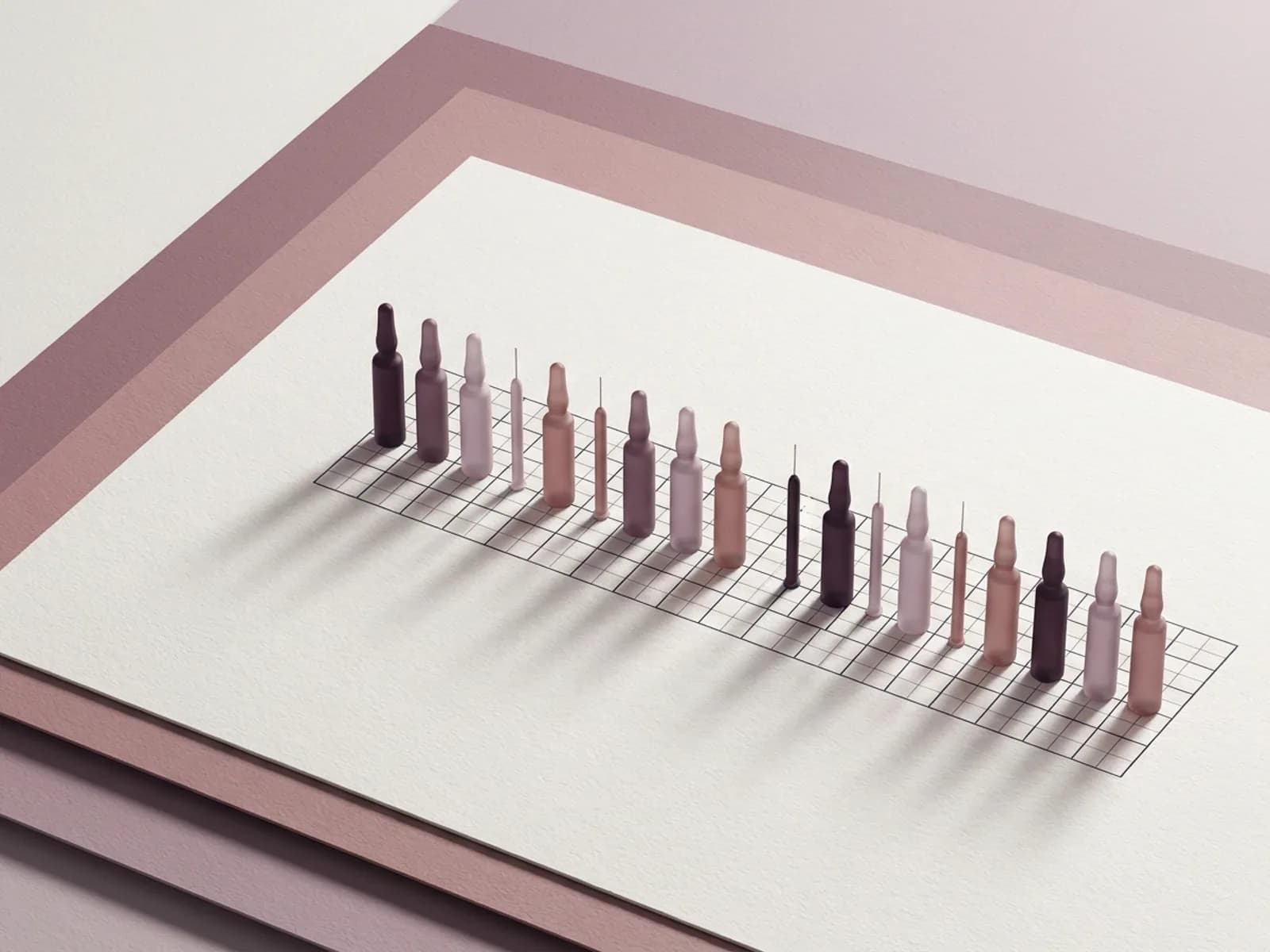
The recurring single-use consumable — not the capital device — sets the profit margin of an aesthetic practice session after session. In the medical spa industry, capital equipment purchases like an $80,000 to $150,000 laser or RF platform receive intense scrutiny, yet the small delivery hardware supplies (needles, cannulae, tips, cartridges, and ampoules) that facilitate these treatments quietly dictate long-term cash flow. A physical delivery consumable that costs between $0.65 and $3.00 to manufacture factory-direct often commands $100 to $500 as a proprietary platform tip when sold by device manufacturers. This represents a 35x to 330x markup that can severely limit treatment margins if not carefully managed. The scale of this consumption is large and growing: ISAPS logged more than 15.3 million injectable procedures worldwide in 2024 — hyaluronic-acid fillers alone grew 5.2% year over year — and ASPS counted over 15.7 million injection-based facial procedures in the United States in 2023, each one consuming a sterile delivery consumable.
On a benchmark $2 million medical spa P&L, non-injectable supplies typically account for only 2% to 3% of revenue for injectable procedures, where the drug or filler is the dominant component of cost of goods sold (COGS). However, for energy-based and platform treatments (such as RF microneedling and hydrofacials), the proprietary single-use tip represents the single largest recurring cost.
Furthermore, in 2026, sourcing these consumables has shifted from a pure procurement decision to a critical regulatory compliance matter. Following the FDA’s November 2025 enforcement sweep against unauthorized suppliers and China's Center for Medical Device Evaluation (CMDE) guidelines effective February 2026, medical directors must ensure that every needle, cartridge, and tip is obtained from an authorized source and matches the registration dossier of the injected substance.
What a Single Treatment Actually Consumes: The Per-Treatment Consumable Stack
To optimize practice margins, operators must look beyond bulk purchasing invoices and calculate the exact "consumable stack" used in every procedure room. A consumable stack is the total collection of single-use, sterile components required to perform a single treatment session on a single patient.
For injectables like neuromodulators and dermal fillers, the stack consists of the primary syringe, reconstitution needles, draw needles, injection needles or microcannulae, sterile saline, alcohol wipes, and gauze. For advanced skin-boosting, mesotherapy, and energy-based procedures, the delivery hardware becomes more complex, involving multi-pin needle cartridges, motorized syringes, or vacuum-assisted tips.
The table below outlines representative consumable stacks across five common aesthetic procedures based on typical clinical protocols (note: these represent common clinical practices, not an absolute clinical standard):
Table 1: Per-Treatment Consumable Stack Reference (Representative Protocols)
| Treatment Type | Primary Consumable / Delivery Hardware | Accessory Supplies in Stack | Representative Protocol & Density |
|---|---|---|---|
| Neuromodulator Injection | 1x Low dead-space syringe (1 mL), 1x Reconstitution needle (18-21G) | 1x Injection needle (30-32G, 4-8mm), Alcohol wipes, sterile gauze | 1-2 vials reconstructed, 10-30 injection points |
| Dermal Filler Injection | 1x Prefilled syringe (supplied with filler), 1x Microcannula (25-27G, 25-50mm) | 1x Entry needle (21-23G to create pilot hole), Alcohol wipes, gauze | 1-2 mL injected, 2-4 entry points |
| Mesotherapy (Nappage/Meso) | 1x Sterile syringe (2-5 mL), 1x Reconstitution/draw needle | 1x Multi-pin connector or 1x Injection needle (27-30G), sterile drape | ~200 superficial injection points (~0.025 mL per point) |
| Hyaluronic Acid Skin-Booster | 1x Prefilled booster syringe (1-2 mL) or injector-assist cartridge | 1x Ultra-fine needle (29-32G, 4mm), sterile skin preparation | ~20 points/mL by serial puncture or 10 Bio Aesthetic Points (BAP) |
| Polynucleotide (PN/PDRN) | 1x Prefilled syringe (1-2 mL) or mesotherapy vial | 1x Nano-needle (33-34G), sterile syringe and connector | High-density intradermal micro-droplets |
| Powered Microneedling | 1x Sterile, single-use needle cartridge (12-42 pin configurations) | 1x Cartridge sheath, sterile glide medium (HA/saline), gauze | Single pass: ~1,600 micro-injuries per second at 0.25-2.5mm depth |
| Radiofrequency (RF) Microneedling | 1x Sterile, single-use RF needle tip (12, 24, or 40-pin insulated/non-insulated) | 1x Bio-hazard tip cover, skin cleansing solution, topical numbing cream | 200-400 pulses (insertions) per treatment area |
| Hydrofacial / Dermabrasion | 1x Vortex-peel tip, 1x Extraction tip, 1x Infusion tip | Proprietary serum tubes, tubing set, waste container liner | 3-step sequential tip application over 30-45 minutes |
Clinicians must match the needle gauge and depth to the viscosity of the product and the target anatomical layer. For example, high-concentration hyaluronic acid fillers require larger gauge needles or cannulae to prevent shear force from degrading the crosslinked gel. Conversely, liquid-thin polynucleotides (PDRN) or skin-boosters can be delivered via ultra-fine 33G or 34G needles, minimizing patient discomfort and downtime.
Understanding the physical stack is the first step toward auditing margin leaks. If an injector uses three different needles during a single dermal filler session due to dulling or clogging, the cost of that procedure's consumable stack rises, directly eroding the margins of that session.
The Razor-and-Blade Markup: Factory-Direct Cartridge vs. Proprietary Platform Tip
The medical aesthetics industry heavily relies on the "razor-and-blade" business model. Device manufacturers (OEMs) sell capital equipment (the "razor") at a low margin or competitive price to hook the clinic, then charge high prices for the single-use cartridges and tips (the "blades") required to run the machine.
To understand the scale of this markup, we must compare the factory-direct manufacturing costs against the retail prices charged by device manufacturers. For a maker-side breakdown of the same consumable stack, see VEMERIX's aesthetic consumable economics report.
Factory-direct OEM microneedle cartridges (containing 12 to 42 stainless steel pins) generally cost between $0.65 and $1.50 to manufacture, depending on order volume. When sold as branded-generic retail cartridges, they command $10 to $30. However, when integrated into a proprietary platform (where the cartridge contains an RF chip or a unique mechanical interface that locks out generic alternatives), the price climbs to $100 to $200 per tip.
For radiofrequency (RF) microneedling tips, which feature gold-plated needles and complex internal wiring, factory-direct manufacturing costs range from $1.50 to $3.00. Yet, clinics routinely pay $300 to $500 per single-use tip to the platform manufacturer.
This markup ladder is summarized in the table below:
Table 2: Consumable Markup and Sourcing Tier Comparison
| Sourcing Tier | Typical Cost to Clinic | Key Characteristics | Regulatory & Quality Controls | Sourcing Risk & Fit |
|---|---|---|---|---|
| Factory-Direct OEM | $0.65 – $3.00 | Direct-from-manufacturer contract supply, high minimum order quantities (MOQs). | ISO 13485 facility, raw biocompatibility data. | Requires direct importing, customs clearance, and batch testing. |
| Branded-Generic Retail | $10.00 – $30.00 | Standard open-market consumables (e.g., TSK needles, generic cartridges). | FDA cleared, CE marked, distributed by authorized medical supply houses. | Low risk if purchased from verified domestic distributors. |
| Proprietary Platform (Mid-Tier) | $72.00 – $200.00 | Locked-in consumables for specific devices (e.g., microneedling pen tips). | FDA cleared under the device's main 510(k), built-in RFID/mechanical lockout. | locked into manufacturer pricing; risk of supply bottlenecks. |
| Proprietary Platform (High-Tier) | $300.00 – $500.00 | Specialized energy-delivery tips (e.g., RF microneedling, ultrasound transducers). | High-level Class II clearance, individual calibration, strict single-use software lock. | Extremely high margin drag; zero legal generic alternatives exist. |
Proprietary platform locks are maintained through multiple mechanisms:
RFID and EEPROM Chips: The device will not fire unless it reads a valid, unexpired security chip embedded in the disposable tip.
Mechanical Tolerances: Patented bayonet or screw mounts prevent generic cartridges from physically attaching to the handpiece.
Fluidic Lockouts: Hydrofacial platforms use custom-molded bottle necks and delivery tubes that prevent generic serums from flowing through the system.
While device manufacturers argue these locks protect patient safety by preventing the use of unsterile or uncalibrated tips, they also serve as highly effective margin-protection systems. We have broken this razor-and-blade dynamic down for a single platform in our CoolSculpting applicator economics analysis; the same lock-in structure repeats across RF microneedling, hydrofacial, and injector-assist platforms. A clinic performing 100 RF microneedling treatments per month spends $120,000 to $600,000 annually on disposable tips alone (1,200 treatments at $100 to $500 per tip). This recurring expense often rivals or exceeds the initial capital cost of the machine within the first year of operation.
Where Consumables Sit in a Med Spa P&L — and the Two Modes of Margin Leak
To understand how consumable markups impact business health, we must look at where these costs sit on a medical spa's Profit and Loss (P&L) statement.
On a standard P&L, procedure-related costs are grouped under Cost of Goods Sold (COGS). For a typical med spa, COGS includes:
Injectable Products: Neuromodulators, dermal fillers, biostimulators, and skin-boosters.
Clinical Supplies: Needles, syringes, cannulae, sterile water, saline, topical anesthetics, and sanitizing agents.
Treatment-Specific Consumables: Proprietary tips, cartridges, patient cards, and serums.
For a healthy $2 million medical spa, total COGS should range between 25% and 35% of total revenue. Net profit margins typically hover between 15% and 25% after accounting for labor (the largest expense), rent, marketing, and administrative costs.
Table 3: Benchmark $2M Medical Spa P&L and Margin Boundaries
| P&L Category | Benchmark % of Revenue | Annual Value ($2M Base) | Operational Target & Control |
|---|---|---|---|
| Gross Revenue | 100.0% | $2,000,000 | Baseline sales across injectables, devices, and skincare. |
| Total COGS | 28.0% | $560,000 | Combined product, injectable, and consumable costs. |
| — Injectable COGS | 20.0% | $400,000 | Pure drug/toxin/filler purchase costs. |
| — Consumables & Supplies | 8.0% | $160,000 | Needles, cannulae, proprietary tips, serums. |
| Gross Profit | 72.0% | $1,440,000 | Margin remaining to cover operational expenses. |
| Operating Expenses | 52.0% | $1,040,000 | Labor (35%), rent (8%), marketing (5%), overhead (4%). |
| Net Profit Margin | 20.0% | $400,000 | Owner cash flow, reinvestment capital. |
A reconciliation is worth stating plainly: the 8% consumables line above is a blended, practice-wide figure that includes high-consumable platform treatments (RF microneedling tips, hydrofacial serums, proprietary cartridges). The 2% to 3% figure cited earlier is narrower — it is the delivery-hardware share (needles, syringes, cannulae) for injectable procedures alone, where the drug or filler, not the delivery hardware, is the dominant cost. The two numbers measure different things, and the gap between them is exactly what the platform-consumable lock exploits.
Within this structure, margin leak occurs in two distinct modes:
Mode 1: The Injectable Supply Leak (Low-Unit, High-Frequency)
For neuromodulators and fillers, the primary cost is the injected substance itself. For example, Botox (onabotulinumtoxinA) costs the clinic approximately $5.00 to $6.00 per unit and is typically billed to the patient at $12.00 to $15.00 per unit, representing a gross product margin of 58% to 60%. Because the drug itself is so expensive, injectors often ignore the cost of the needles and syringes used to deliver it.
However, if an injector uses a high-end specialty needle (like a TSK invisible needle costing $4.50) instead of a standard clinical needle ($0.15) for every injection site, or opens multiple syringes due to poor planning, the accessory consumable cost rises from $0.50 to $15.00 per session. Across thousands of procedures annually, this represents a significant, silent leak in gross margin.
This leak is closely tied to the clinic's inventory management. Clinics that do not maintain a strict Botox vial log workflow often experience significant product and supply wastage, which directly inflates the consumables line on the P&L.
Mode 2: The Platform Consumable Lock (High-Unit, Fixed-Frequency)
For energy-based treatments like RF microneedling, the relationship is reversed. The "product" injected or applied is minimal (often just a generic conductive gel or basic hyaluronic acid serum), but the single-use cartridge is a major expense.
If a clinic charges $750 for an RF microneedling session and pays $350 for the proprietary tip, the consumable alone represents 46.6% of the session revenue. When you add the labor cost of the nurse injector (typically 15% to 20% of session revenue, or $112 to $150) and credit card processing fees, the operational margin before rent and overhead shrinks to less than 30%. In this mode, the clinic is highly vulnerable to changes in vendor pricing. A $50 increase in tip cost by the manufacturer immediately reduces the clinic's profit margin, with little room to pass the cost onto the patient without reducing demand.
To mitigate this, operators must carefully evaluate consumable costs when modeling the ROI of any new device purchase. A lower upfront device price is often a trap if the recurring consumable cost is high. For a detailed guide on modeling these capital decisions, see our device lease vs purchase ROI model.
Additionally, the end of the consumable lifecycle requires careful operational management. Spent needles, cartridges, and tips cannot simply be thrown away; they must be disposed of according to biohazard rules. Failing to account for these disposal costs further erodes margins, as detailed in our guide on med spa waste disposal compliance.
Single-Use Sterility, Reprocessing Risk, and the Gray-Market Cartridge Problem
Faced with high proprietary consumable costs, some clinics look for cheaper alternatives. This search has created a large gray market for counterfeit, diverted, and reprocessed cartridges. It has also led some practices to attempt to resterilize and reuse single-use tips. Both practices carry severe clinical, regulatory, and legal risks.
The Dangers of Reprocessing and Reusing Single-Use Tips
Medical devices labeled "Single-Use Only" are designed and validated to be used once on a single patient. They are not constructed to withstand the physical and chemical stresses of sterilization processes like autoclaving or chemical washing.
For microneedling and RF cartridges, reprocessing introduces several specific failure points:
Needle Dullness and Hooking: Stainless steel and gold-plated needles dull significantly after a single treatment. Reusing a dulled needle requires greater force to penetrate the skin, causing microscopic tearing, increased pain, and a higher risk of post-inflammatory hyperpigmentation (PIH).
Thermal Degradation: The plastic housings and insulation materials of RF cartridges degrade when exposed to heat, leading to insulation breakdown. This can cause electrical arcing, resulting in severe epidermal burns and scarring.
Bioburden Accumulation: The narrow channels and internal springs of powered microneedling cartridges are nearly impossible to clean completely. Microscopic tissue, blood, and sebum can remain trapped inside the housing. If reused, these contaminants can be introduced into the next patient's skin, potentially transmitting bloodborne pathogens like Hepatitis B, Hepatitis C, and HIV.
Gray-Market and Counterfeit Consumables
The gray market consists of genuine products diverted from authorized supply chains, while the counterfeit market consists of cheap imitations designed to look like proprietary cartridges.
Purchasing from these unauthorized channels exposes the clinic to significant product quality risks. Unlike legitimate products that undergo strict quality control, gray-market and counterfeit cartridges often suffer from manufacturing defects, including uneven needle lengths, loose pins, and compromised sterile packaging.
To understand the safety implications of these quality defects, we can look at the FDA's Manufacturer and User Facility Device Experience (MAUDE) database. MAUDE is a passive surveillance system that collects medical device reports (MDRs) of suspected device-associated deaths, serious injuries, and malfunctions.
[!IMPORTANT] Because MAUDE is a passive surveillance database, report counts do not reflect the true incidence of adverse events in the population, nor do they establish direct causality. They serve as warning signals for quality and safety issues.
An analysis of the FDA's MAUDE and Medical Device Recalls databases reveals a clear signal regarding the risks associated with these product categories:
Dermal Fillers (Product Code LMH): The FDA MAUDE database contains 22,242 lifetime reports under this product code, including 18,514 injuries, 1,644 malfunctions, and 16 deaths. The FDA recalls database shows 7 recalls for dermal fillers between 2011 and 2018, all traced to manufacturing quality issues, process control failures, or component mix-ups.
Powered Microneedling Devices (Product Code QAI): The FDA MAUDE database contains 58 reports (including 45 injuries and 13 malfunctions). The FDA recalls database shows 3 recalls (one in 2019 and two in 2023). These recalls were initiated due to nonconforming materials, software glitches, and packaging defects that compromised sterility.
For a deeper breakdown of these adverse-event signals by product code, see our analyses of dermal filler MAUDE adverse events and microneedling device adverse events.
While the majority of these reports involve authorized devices used by licensed professionals, they highlight the baseline risk of these procedures. When a clinic introduces unverified, gray-market, or counterfeit consumables into the mix, these risks multiply. If a patient suffers an infection or burn from an unauthorized cartridge, the clinic's malpractice insurance will likely deny coverage, exposing the owners to direct liability. For a detailed breakdown of how to audit supply chains for authenticity, see our guide on counterfeit Botox and diverted filler verification.
The 2026 Sourcing-Compliance Turn: FDA "Authorized Source" and China's Delivery-Needle Clause
In 2026, sourcing consumables has evolved from an operational choice to a strict regulatory mandate. Two major regulatory changes have transformed how clinics must buy and track their sterile supplies: the FDA's November 2025 "authorized source" sweep and China's Center for Medical Device Evaluation (CMDE) delivery-needle clause.
1. The FDA's "Authorized Source" Enforcement (November 2025)
On November 5, 2025, the FDA issued 18 warning letters to clinics and distributors across five countries (including China, South Korea, Panama, the Netherlands, and the United States) for marketing and importing unapproved and misbranded botulinum toxins and dermal fillers. In these warning letters, the FDA explicitly stated that providers must obtain prescription drugs and devices only from "authorized sources."
This enforcement action was driven by patient safety concerns. The CDC’s 2024 investigation into counterfeit Botox documented 17 cases of botulism-like symptoms across 9 states, resulting in 13 hospitalizations. The investigation traced the source of these adverse events to unlicensed injectors using counterfeit or diverted products sourced from unauthorized online vendors.
Following this sweep, state medical boards and health departments have increased audits of med spa purchasing records. Presenting an invoice from an unauthorized online distributor for needles, syringes, or cartridges can lead to immediate citation, device seizure, and suspension of the clinic's operating license.
2. China's CMDE Delivery-Needle Clause (February 2026)
In China, the Center for Medical Device Evaluation (CMDE) issued Announcement No. 5 of 2026 (effective February 6, 2026), updating the "Registration Review Guideline for Aesthetic Sodium Hyaluronate Injectable Fillers." This update introduced a strict "Delivery System Compliance (Syringes and Needles)" clause.
Under the new rules, if a dermal filler is packaged with a delivery needle or syringe that does not have its own China registration, the filler manufacturer must submit complete chemical, physical, and biocompatibility validation data for the entire delivery system as part of the filler's registration dossier. Overseas supplier documentation is no longer accepted on its own.
This regulatory shift reflects a growing international consensus: the delivery needle is not an isolated tool; it is an active component of the drug or filler delivery system that directly impacts patient safety.
The table below summarizes how delivery hardware is classified and regulated across different jurisdictions:
Table 4: Regulatory Classification of Delivery Hardware (US, EU, China)
| Jurisdiction | Needle / Cannula Class | Microneedle Cartridge Class | RF Microneedling Tip Class | Primary Regulatory Target |
|---|---|---|---|---|
| United States (FDA) | Class II (21 CFR 880.5570, Product Code FMI) | Class II (21 CFR 878.4430, Product Code QAI) | Class II (21 CFR 878.4400, Product Code OUH) | Sterility, needle retention force, electrical safety. |
| European Union (MDR) | Class IIa (Rule 6, transient invasive) | Class IIa (Rule 6, transient invasive) | Class IIb (Active device delivering energy) | Sterility validation, raw material sourcing, manufacturing QMS. |
| China (NMPA) | Class III (Strict drug-device combination review) | Class II (Aesthetic mechanical device) | Class III (Active energy-emitting device) | Biocompatibility, heavy metal extractables, needle sharpness. |
Of the approximately 150 FDA product codes regulating needles, syringes, cannulae, and injectors in the United States, 93 are Class II, 46 are Class I, and only 4 are Class III. This shows that delivery hardware is overwhelmingly treated as a regulated medical device where the compliance bar is sterility, material integrity, and quality systems — not just clinical marketing claims.
For operators, this classification map means that buying a box of needles or a cartridge that lacks the appropriate clearance for its specific category is a direct violation of federal and state laws.
A Consumable Sourcing Checklist for Med-Spa Operators
To navigate these economic and regulatory pressures, medical spas must establish a formal, documented procurement audit. Every sterile consumable entered into clinic inventory must pass the following five-point checklist:
1. Verification of ISO 13485 Certification
Confirm that the manufacturer of the consumable operates under an ISO 13485 certified quality management system. ISO 13485 is the international standard for medical device manufacturing, ensuring that the factory maintains strict controls over raw material purity, assembly environment contamination, and batch quality testing.
Action: Request a copy of the manufacturer's current ISO 13485 certificate. Confirm the scope of the certificate covers the specific manufacturing facility and product line you are buying.
2. Sterility Validation (Ethylene Oxide - EO Sterilization)
Ensure that all needles, cannulae, and cartridges undergo validated sterilization, typically using Ethylene Oxide (EO) gas. EO sterilization is the industry standard for heat-sensitive medical devices, as it destroys microbial life without degrading plastics or adhesives.
Action: Check the product packaging for the sterile barrier symbol and the "STERILE EO" mark. Request the manufacturer's sterilization validation report or certificate of conformance for the specific lot number.
3. Lot-Number Traceability
Never accept bulk consumables shipped in unmarked bags or loose containers. Every sterile needle, cartridge, or syringe must be individually packaged and labeled with a unique lot number and expiration date.
Action: Injectors must document the lot number of every consumable used in the patient’s chart alongside the product lot number. This documentation is essential in the event of a product recall or an adverse event investigation.
4. Verification of Device Compatibility
If using an injector-assist device or a proprietary microneedling pen, confirm that the consumable is cleared for use with that specific platform.
Action: Check the device's Instructions for Use (IFU) or 510(k) summary to verify compatible consumable codes. Using an unauthorized third-party cartridge not only violates regulatory rules but can also void your device warranty and liability insurance. For guidance on device compatibility, see our injector-assist device buying guide.
5. Authorized-Source Documentation
Maintain a complete paper trail for every consumable purchase. This documentation must prove that the product was purchased directly from the manufacturer or an authorized distributor.
Action: Archive all purchase orders, invoices, and shipping manifests. Keep these records for at least five years, or according to your state's medical record retention laws.
By implementing this sourcing checklist, clinics can protect their margins, secure their supply chains, and defend their practices against regulatory audits. Sourcing consumables is no longer just a purchasing decision; it is a fundamental pillar of clinical safety and practice compliance.
Frequently Asked Questions (FAQs)
How much does an RF microneedling cartridge or tip actually cost per treatment?
For proprietary platforms, clinics typically pay between $100 and $200 per single-use tip for lower-tier devices, and $300 to $500 for high-end, energy-calibrated tips. Factory-direct manufacturing costs for these same tips are estimated at $1.50 to $3.00, representing a significant platform markup.
Are single-use needles and cannulae a meaningful part of my injectable COGS?
Yes. While the drug or filler is the largest component of injectable COGS, high-end specialty needles (such as ultra-thin or multi-bevel needles) and premium microcannulae can add $5.00 to $15.00 to the cost of a single procedure stack. Without close inventory controls, this cost can quietly erode the margins of high-volume injectable treatments.
Is it legal to buy cheaper generic or online cartridges for my proprietary device?
In most jurisdictions, using a third-party cartridge that is not cleared for use with your specific device violates the device’s cleared Indications for Use and the manufacturer’s warranty. It can also lead to insurance claims being denied if a patient experiences an adverse event, as the procedure was performed using an unauthorized combination.
What does the FDA mean by "authorized source," and does it apply to needles and tips or just the drug?
An "authorized source" is a manufacturer or distributor registered with the FDA (and appropriate state licensing boards) to distribute medical devices and prescription drugs. This standard applies to both the injected substance and the delivery hardware (needles, syringes, and cartridges), as both are classified as regulated medical products.
Does the 2026 China rule matter to a US-based med spa?
Yes. Because China is a major global manufacturer of aesthetic consumables, changes in NMPA and CMDE rules directly impact global supply chains. Manufacturers seeking registration in China must validate their entire delivery system, which raises the baseline quality and documentation standard for products distributed internationally, including in the US and EU.
Sources
FDA. "FDA Warns Companies Over Illegal Marketing of Botox and Related Products." U.S. Food and Drug Administration. 5 Nov 2025. https://www.fda.gov/news-events/press-announcements/fda-warns-companies-over-illegal-marketing-botox-and-related-products
CDC. "Harmful Reactions Linked to Counterfeit Botox or Mishandled Botulinum Toxin Injections." Centers for Disease Control and Prevention. 24 June 2024. https://www.cdc.gov/botulism/outbreaks/harmful-reactions-botox-injections/index.html
China CMDE. "Registration Review Guideline for Aesthetic Sodium Hyaluronate Injectable Fillers (2026 Revision)." Center for Medical Device Evaluation, NMPA. Announcement No. 5 of 2026. 6 Feb 2026. https://www.cmde.org.cn/xwdt/shpgzgg/gztg/20260206132814183.html
ISAPS. "ISAPS Global Survey 2024." International Society of Aesthetic Plastic Surgery. June 2025. https://www.isaps.org/media/oogpzodr/isaps-global-survey_2024.pdf
ASPS. "2023 Plastic Surgery Statistics Report." American Society of Plastic Surgeons. 2024. https://www.plasticsurgery.org/news/plastic-surgery-statistics
FDA. "Manufacturer and User Facility Device Experience (MAUDE) Database." U.S. Food and Drug Administration. https://www.accessdata.fda.gov/scripts/cdrh/cfdocs/cfmaude/search.cfm
FDA. "Medical Device Recalls Database." U.S. Food and Drug Administration. https://www.accessdata.fda.gov/scripts/cdrh/cfdocs/cfRES/res.cfm
FDA. "Product Classification Database." U.S. Food and Drug Administration. https://www.accessdata.fda.gov/scripts/cdrh/cfdocs/cfPCD/classification.cfm
VEMERIX. "The Consumable Economics of Aesthetic Injection & Skin-Boosting." Vemerix Industry Report. 13 Jul 2026.
Sorso. "Med Spa Operating Costs: Benchmarks and P&L Structure." Sorso Blog. https://www.thesorso.com/blog/med-spa-operating-costs
Cisema. "CMDE 2026 Sodium Hyaluronate Filler Registration Guideline." Cisema Regulatory Tracker. March 2026. https://cisema.com/en/cmde-2026-ha-guideline/
PMFA Journal. "The applications of mesotherapy in aesthetic medicine." The PMFA Journal. https://www.thepmfajournal.com/features/post/the-applications-of-mesotherapy-in-aesthetic-medicine
Medica Depot. "Skinbooster Injection Technique." Medica Depot Blog. https://www.medicadepot.com/blog/skinbooster-injection-technique.html